The 2026 Basement Home Theater Guide: Immersive Tech for Rainy Spring Days
In Minnesota, “Spring” is often just a polite word for a three-month rainy season. While the melting snow and April showers might keep you off the golf courses in Woodbury, they provide the perfect excuse to retreat underground.
At We Finish Basements, we’ve seen a massive shift in how homeowners view their lower levels. It’s no longer just “extra space”—in 2026, the basement is the high-tech heart of the home. If you’re looking for basement finishing near Woodbury, here is your definitive guide to building a 2026-ready immersive home theater that makes rainy days the highlight of your week.
1. AI-Driven Acoustics & “Matter” Integration
The biggest jump in 2026 technology is the move from reactive to proactive smart homes. Using the Matter protocol, your home theater now talks to your entire house seamlessly.
- AI Sound Calibration: Forget manual tuning. Modern 2026 receivers use AI to analyze your basement’s specific geometry—accounting for those concrete walls and support beams—to create a perfect “sweet spot” regardless of where you sit.
- Predictive Lighting: As the spring clouds darken over Woodbury, your theater’s ambient lighting can automatically adjust its Kelvin temperature to keep your internal clock in sync, or dim to “Movie Mode” the moment your streaming service launches.
2. 8K Visuals and Short-Throw Innovation
While 4K was the standard for years, 8K resolution has officially taken the throne for premium basement installs.
- The Benefit: In the compact layout of many Woodbury basements, 8K allows you to sit closer to a larger screen without seeing a single pixel.
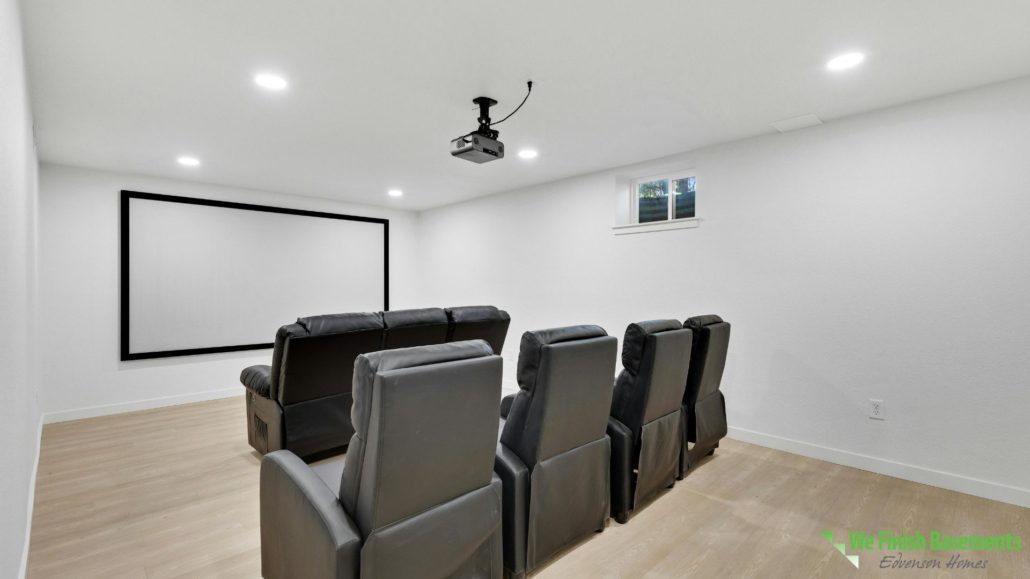
- Ultra-Short Throw (UST) Projectors: These remain the king of basement finishing. They sit just inches from the wall, meaning you don’t have to worry about low basement ceilings or shadows when someone gets up to grab more popcorn.
3. Climate Control for the Minnesota “Mud Season”
A theater is only immersive if it doesn’t feel like a cave. During a rainy Minnesota spring, humidity is the enemy of high-end electronics.
- Smart Dehumidification: We integrate industrial-grade, silent dehumidifiers into our HVAC designs. These are tied to sensors that activate automatically when Woodbury’s humidity spikes.
- Subfloor Moisture Barriers: We use advanced vapor barriers and raised subflooring to ensure your feet stay warm and your custom theater carpet stays bone-dry, even during the heaviest May downpours.
 4. The “Social Cinema” Layout
 4. The “Social Cinema” Layout
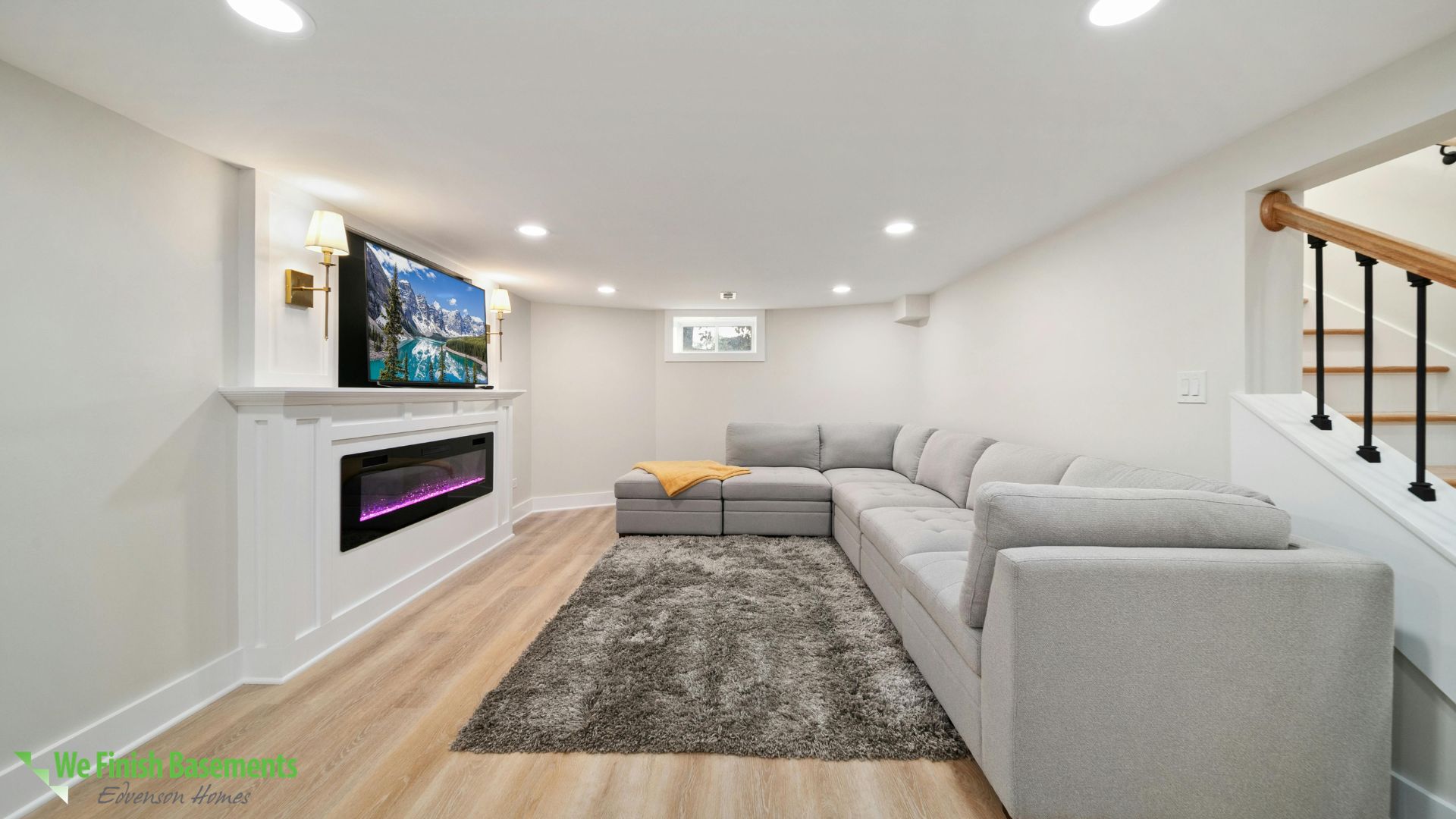
In 2026, the trend has moved away from claustrophobic rows of seats toward Social Cinema.
- Hybrid Seating: Think oversized pit sofas and “media islands” that allow for lounging during a movie or sitting upright for a gaming tournament.
- Integrated Bar Tops: Many of our Woodbury clients are opting for “shadow bars”—a second tier of seating behind the main sofa featuring a high-top counter, perfect for snacks or working on a laptop while the game is on.
FAQ
Q: How do you prevent basement theaters from feeling damp during spring?
A: We utilize a multi-layer defense including exterior drainage checks, interior vapor barriers, and dedicated HVAC zones with AI-monitored humidity control to keep the air crisp and dry.
Q: Is 8K worth it for a basement setup?
A: Yes, especially for larger screens (85″+). The pixel density of 8K provides a more lifelike, “window-like” experience that is essential for total immersion in windowless basement environments.
Q: Can you soundproof a basement theater from the rest of the house?
A: Absolutely. We use “room-within-a-room” construction techniques, including acoustic drywall (like QuietRock) and dampened joists, to ensure your blockbuster movie doesn’t wake up the kids in the bedrooms above.
Q: How long does a typical basement finishing project take in Woodbury?
A: While every project varies, a high-end custom theater and basement finish typically takes 8–12 weeks from framing to the final tech calibration.