Finished Basement Flooring: The Best Moisture-Resistant Materials for MN Homes in 2026
Minnesota basements are put through an absolute gauntlet. Between deep winter frost, heavy spring snowmelts, and humid summer downpours, the soil surrounding your home undergoes constant expansion and saturation. Because concrete is naturally porous, it acts like a sponge, drawing that moisture upward into your lower-level living space.
If you are planning a remodeling project with We Finish Basements, choosing the wrong material can quickly lead to buckled boards, peeling adhesives, and costly mold remediation. To protect your investment in 2026, you need materials engineered specifically to handle below-grade moisture vapor transmission.
Here is our expert breakdown of the top moisture-resistant flooring options optimized for the unique Twin Cities climate.
1. Luxury Vinyl Plank (LVP) & Tile (LVT)
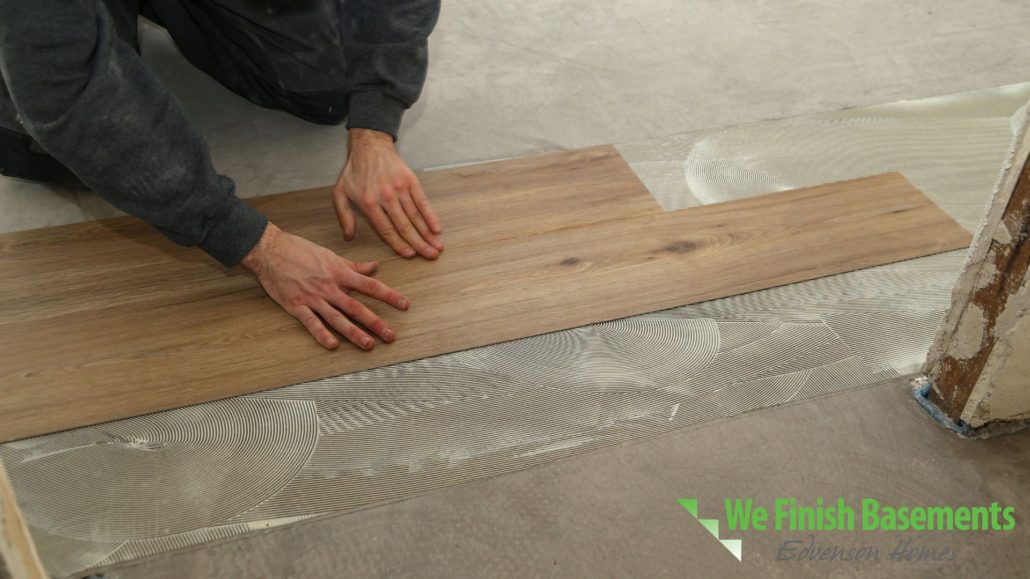
Luxury vinyl has firmly established itself as the go-to standard for finished basements in Minnesota. Unlike older generations of sheet vinyl, modern LVP uses a thick, rigid core—typically Stone Plastic Composite (SPC)—that is completely waterproof.
- Why it works for MN homes: LVP doesn’t contain organic fibers, meaning it won’t warp or buckle when exposed to concrete subfloor condensation. It also offers a warmer, more forgiving surface underfoot than raw stone or concrete during chilly January stretches.
- Pro Tip: Opt for a floating click-lock system over a glue-down application. Hydrostatic pressure (the pressure of water pushing up through concrete) can dissolve standard adhesives over time, causing edges to curl.
2. Ceramic and Porcelain Tile
If your basement has a history of hydrostatic dampness or minor weeping walls during spring thaws, ceramic or porcelain tiles are practically bulletproof.
- Why it works for MN homes: Fired at extreme temperatures, porcelain is dense and virtually non-porous. It offers zero organic matter for mold or mildew to feed on.
- The Caveat: Tile reflects the ambient temperature of the ground below it. In Minnesota, this means bare tile will feel freezing in the winter unless paired with a radiant in-floor heating system or high-quality area rugs.
 3. Engineered Concrete Coatings (Polyaspartic & Epoxy)
 3. Engineered Concrete Coatings (Polyaspartic & Epoxy)
For a sleek, modern, or industrial aesthetic—especially in basement home gyms, workshops, or high-traffic family rooms—advanced concrete coatings are a top-tier solution.
- Why it works for MN homes: Unlike traditional DIY epoxy kits that can peel or yellow under moisture stress, professional polyaspartic coatings create a seamless, chemical bond with the concrete slab. This entirely eliminates seams where moisture could hide.
4. Waterproof Laminate (With Vapor Barriers)
Traditional laminate contains a wood-fiber core that swells like a sponge at the first sign of water. However, the newest generation of waterproof laminate features tightly sealed click-lock joints and water-repellent cores.
- Why it works for MN homes: It provides a stiffer, highly scratch-resistant surface that looks and feels closer to authentic hardwood.
- Crucial Rule: To use laminate safely below grade in Minnesota, you must install a high-density vapor barrier with a perm rating of 0.1 or lower underneath the flooring to isolate it from the concrete slab.
Materials to Avoid in Your Lower Level
When completing a basement, our golden rule is to avoid organic, moisture-absorbent materials directly on the concrete.
- Solid Hardwood: The changing humidity levels between a Minnesota summer and winter will cause real wood to cup, warp, and split.
- Wall-to-Wall Carpet (with Standard Padding): Traditional carpet padding holds moisture trapped beneath it, inevitably leading to musty smells and mold growth. Alternative: Use modular carpet tiles with specialized moisture-resistant backings if you want a softer feel.
FAQ
What is the absolute best waterproof flooring for a basement?
Luxury Vinyl Plank (LVP) with a rigid SPC core is widely considered the best all-around option. It combines 100% waterproof performance with aesthetic warmth, durability, and a comfortable feel underfoot.
Do I need a vapor barrier under basement vinyl plank flooring?
While many LVP options feature attached underlayments, installing a dedicated 6-mil polyethylene vapor barrier over the concrete slab is highly recommended for Minnesota homes to block vapor transmission.
Why does my finished basement floor feel so cold in the winter?
Concrete slabs absorb the ground temperature, which drops significantly during MN winters. Materials like tile and polished concrete track this temperature closely, whereas floating LVP or floors paired with thermal subfloor panels retain more room heat